American Museum of Natural History
The museum of everyone's childhood
⏱ 3-4 hours👤 All ages$$$
Get Tickets
Get Natural History NYC Tickets
Skip the line · mobile tickets accepted at the door
Start with the fourth floor, because everyone does and everyone should: the fossil halls run one of the planet's great dinosaur collections through a circuit that reads as evolution's family album — the T. rex mount that defined the species in the public mind, Apatosaurus under the original mislabeled fame, and the 122-foot titanosaur whose neck exits its own gallery toward the elevators, the museum's honest admission that some animals outgrow architecture. One floor's drop lands in the Milstein Hall of Ocean Life, where the blue whale — full-size, belly-lit, diving through the air of a two-story room — has been the city's favorite ceiling since the 1960s; the squid-versus-sperm-whale diorama in the balcony dark remains the building's best nightmare.
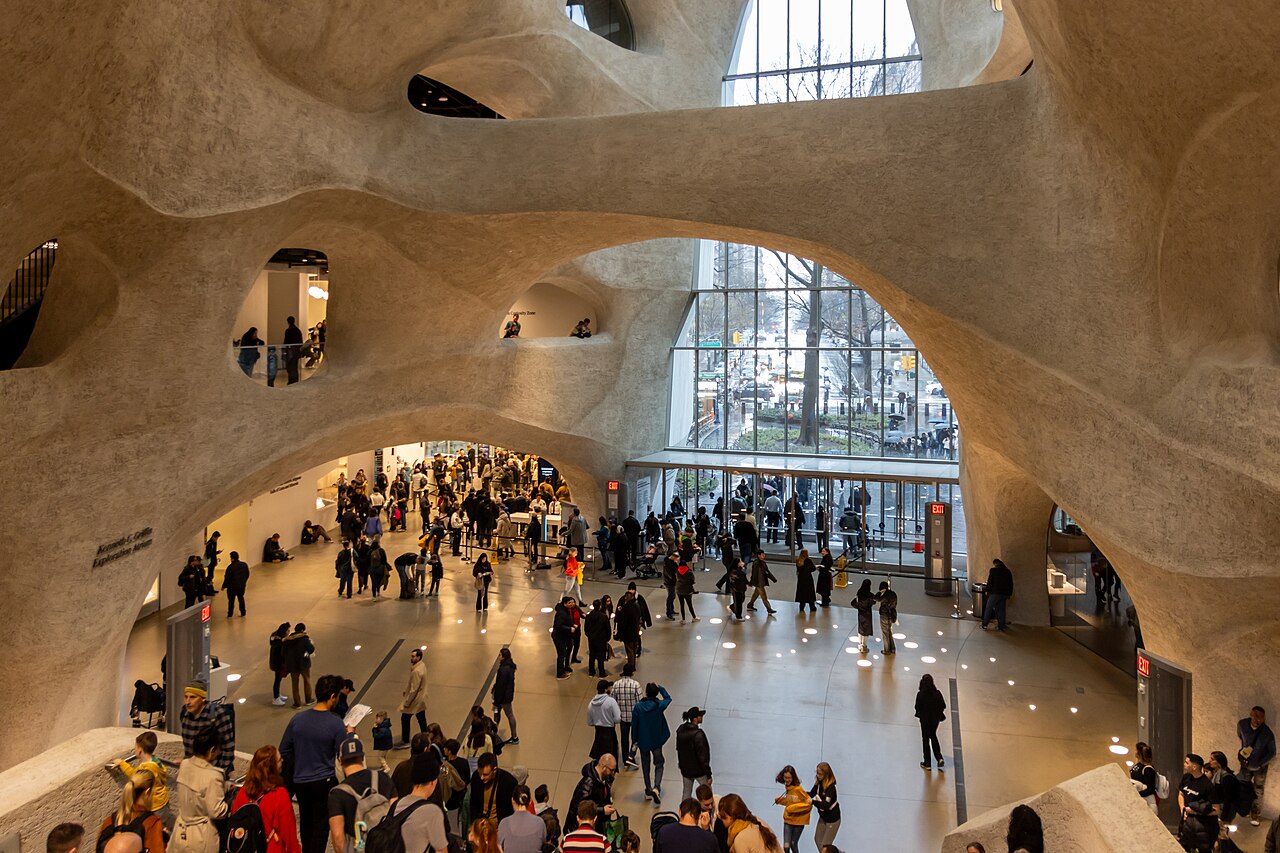
The dioramas deserve their legend. The Akeley Hall of African Mammals — the elephant herd mid-stride in the center, the painted horizons curving behind taxidermy staged by the men who invented the craft — is a century old and still the standard every natural history museum chases; the North American halls (the Alaska brown bears, the wolves at dusk) run it close. The Gilder Center, opened 2023, gave the museum its future wing: Studio Gang shaped the atrium like a wind-carved canyon, and inside it the insectarium's living leafcutter-ant highway, the butterfly vivarium's 80-degree flutter (timed add-on, worth it), and Invisible Worlds' wraparound projection hall modernize the museum's oldest trick — making the unseeable walkable. The Rose Center's planetarium sphere runs space shows narrated by astrophysics royalty, and the Hall of Minerals and Gems stocks the Star of India sapphire for the magpie finale.
Logistics: timed entry online; NY/NJ/CT residents set their own price. General admission covers the permanent halls — the planetarium show, butterflies, and special exhibitions stack as add-ons, and the full bundle is the right call for a first visit. Weekday mornings in school season belong to field trips (louder but shorter); weekend openings beat weekend middays by hours of queue. Three hours is the family standard, with the whale room's benches as the designated regroup point. The 81st Street subway station delivers directly into the basement, Central Park absorbs the afterglow across the street, and the Met waits a crosstown bus away for the ambitious museum weekend this market's guides map.
What to Expect
Format
Four blocks of natural wonder — the fossil-hall dinosaur circuit, the blue whale's ocean room, the legendary dioramas, the Hayden Planetarium, and the Gilder Center's insectarium and butterfly vivarium. Timed entry; general admission plus optional add-ons.
Best Time
Weekend opening slots or weekday afternoons after the school groups ebb. The butterfly vivarium books its timed slots fastest — reserve with entry.
Duration
Three hours standard; dinosaur-obsessed households should budget four.
Tips
Book the add-on bundle for a first visit — the planetarium show earns it. Start on the fourth floor with the dinosaurs and work down. NY/NJ/CT residents pay what they wish. The 81st Street subway enters the basement directly — the rainy-day cheat code.
⚡ Quick Picks
Best For
Families — the best children's museum in America that never admits to being one.
Families
Dinosaurs, whale, butterflies, done in that order with the ocean room benches as base camp. The under-10 ceiling is three hours; honor it.
Couples
The dioramas at a quiet hour are unexpectedly romantic — painted dusks, standing wolves — and the planetarium dome does the rest.
Pair With
Central Park across the street; the Met by crosstown bus for the full museum weekend.
Time Needed
Three to four hours.
Ready to book Natural History NYC?
Get Tickets →Frequently Asked Questions
What's unmissable with kids?
The fourth-floor dinosaur circuit, the blue whale's room, and the Gilder Center's butterflies and ant colony — that triangle is the day. The squid-and-whale diorama supplies the delicious scare.
Is the Gilder Center worth the detour?
It's the museum's new heart — Studio Gang's canyon atrium alone justifies it, and the insectarium and butterfly vivarium are the strongest new family halls in the country.
How does pricing work?
Timed general admission online, with planetarium shows, butterflies, and special exhibits as add-ons — bundle on a first visit. New York, New Jersey, and Connecticut residents pay what they wish.
How crowded does it get?
School-year weekday mornings run loud with field trips; weekend middays queue. Weekend openings and late weekday afternoons are the calm windows.
Natural History or the Met with one day?
Kids under ten: here, no contest. Art-first adults: the Met. The crosstown bus connects them in fifteen minutes, which is why the museum weekend guide does both.
More All Museum Attractions
Browse all →
The Metropolitan Museum of Art
America's museum, full stop — two million works across five thousand years in the Fifth Avenue palace, from the Temple of Dendur in its glass hall to armor, Rembrandts, and a rooftop over Central Park. The one every ranking starts with.
Field Museum
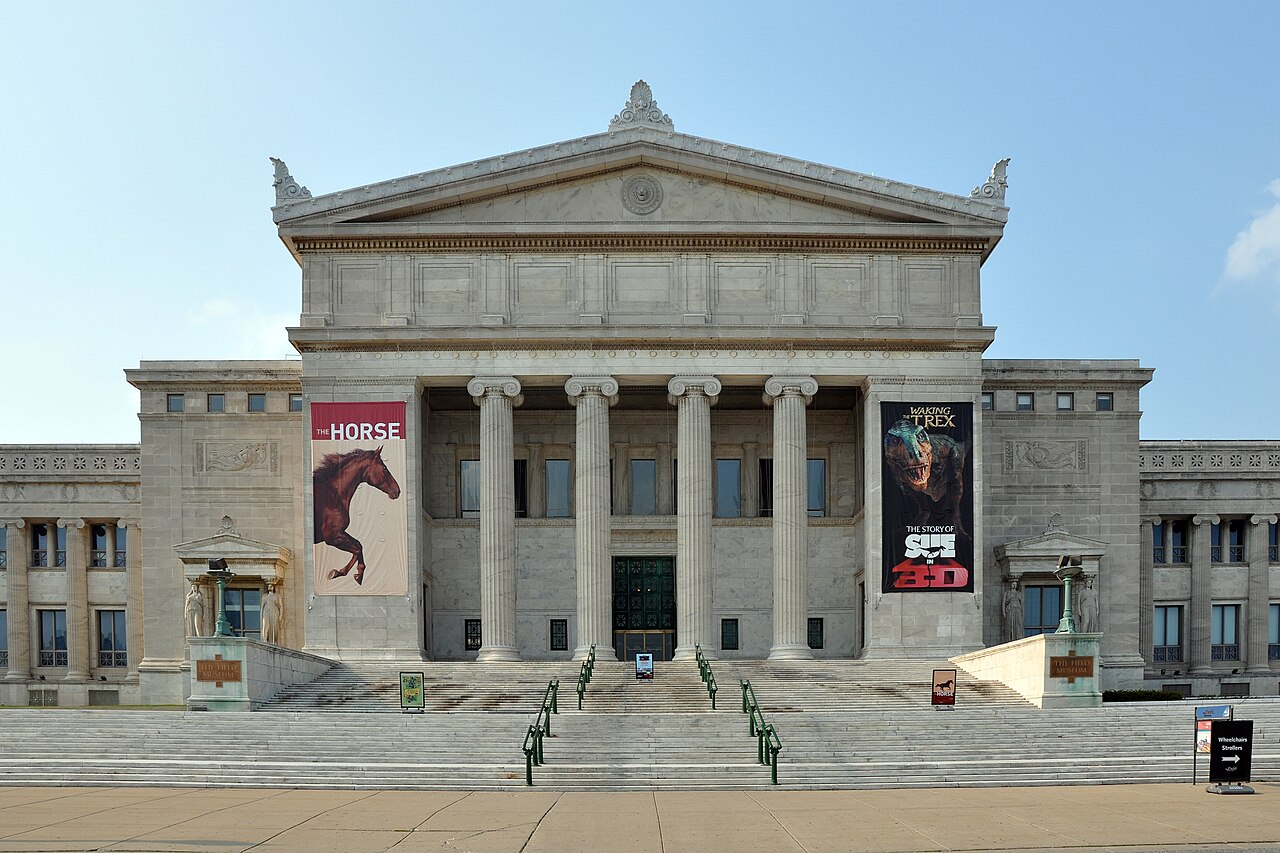
SUE the T. rex — the most complete ever found — holds court in a marble temple on Chicago's Museum Campus, backed by a 122-foot titanosaur, a walk-through Egyptian tomb, man-eating lions, and natural history at imperial scale.

National September 11 Memorial & Museum
The twin reflecting pools in the towers' footprints, and beneath them the museum that holds the day itself — the Survivors' Stairs, the Last Column, the slurry wall. The hardest visit on this list, and among the most necessary.